THE APPEAL
Why the Claude Code + Obsidian setup took off in 2026
Nick Saraev popularized the CLAUDE.md approach, a single markdown configuration file that gives Claude persistent context about your business, how you work, and what it should know. One file. The base layer. Real, useful, and limited in ways most people do not talk about.
Then 2026 accelerated everything. Andrej Karpathy published an LLM wiki gist on April 4, 2026. Garry Tan published GBrain the next day, 13,535 GitHub stars, built on Claude Code. Nate Herk built a Claude Code OS course with 127,000 views and 718,000 subscribers, and made the core tension plain: “It’s difficult to give a step-by-step playbook because everyone runs their business differently.”
Consultants, solopreneurs, and service business owners are building these systems right now, running their proposals, morning briefings, and admin through Claude Code. For technically fluent people with time to build, it works.
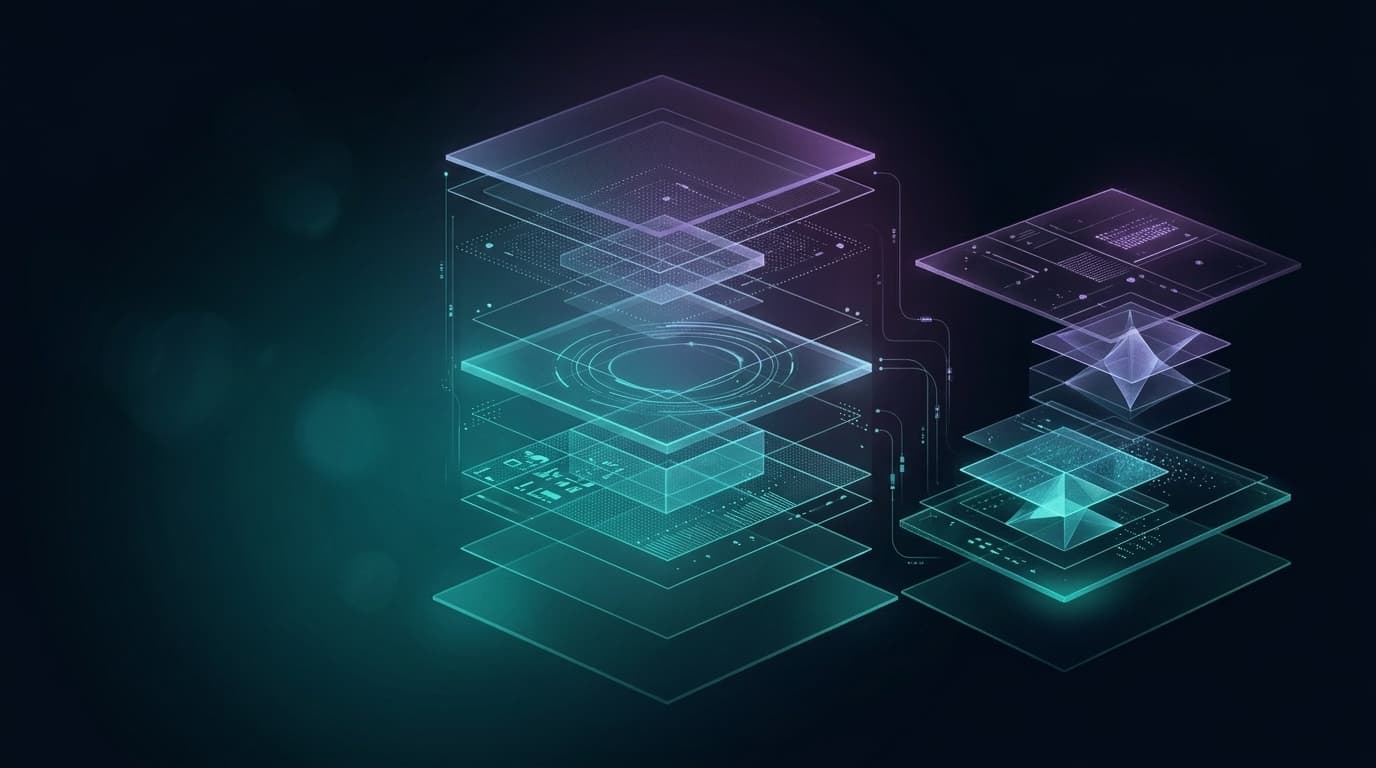
In May 2026, Chase AI released two videos naming this setup the Agentic OS, a three-layer architecture: a skill and automation library, a structured memory vault built on the Karpathy pattern, and a web dashboard that lets non-technical users access the system through buttons instead of a terminal. The framing is more sophisticated than the Obsidian-first tutorials. It is also a more honest acknowledgment of the gap. At minute 18 of his second video, Chase says this directly: “You aren’t the ICP here. There’s true value for the 99.9%. It just isn’t really given to them right now.”
He named the audience. He did not build a path for them.
Here is what the tutorials do not follow up on.
THE CEILING
Where it stops working for a service business
These are not edge cases. They are the design constraints of a personal productivity tool being used as business infrastructure.
“I run a small consulting business and was drowning in admin.”
r/ClaudeAI, consulting founder
01
THE TERMINAL REQUIREMENT
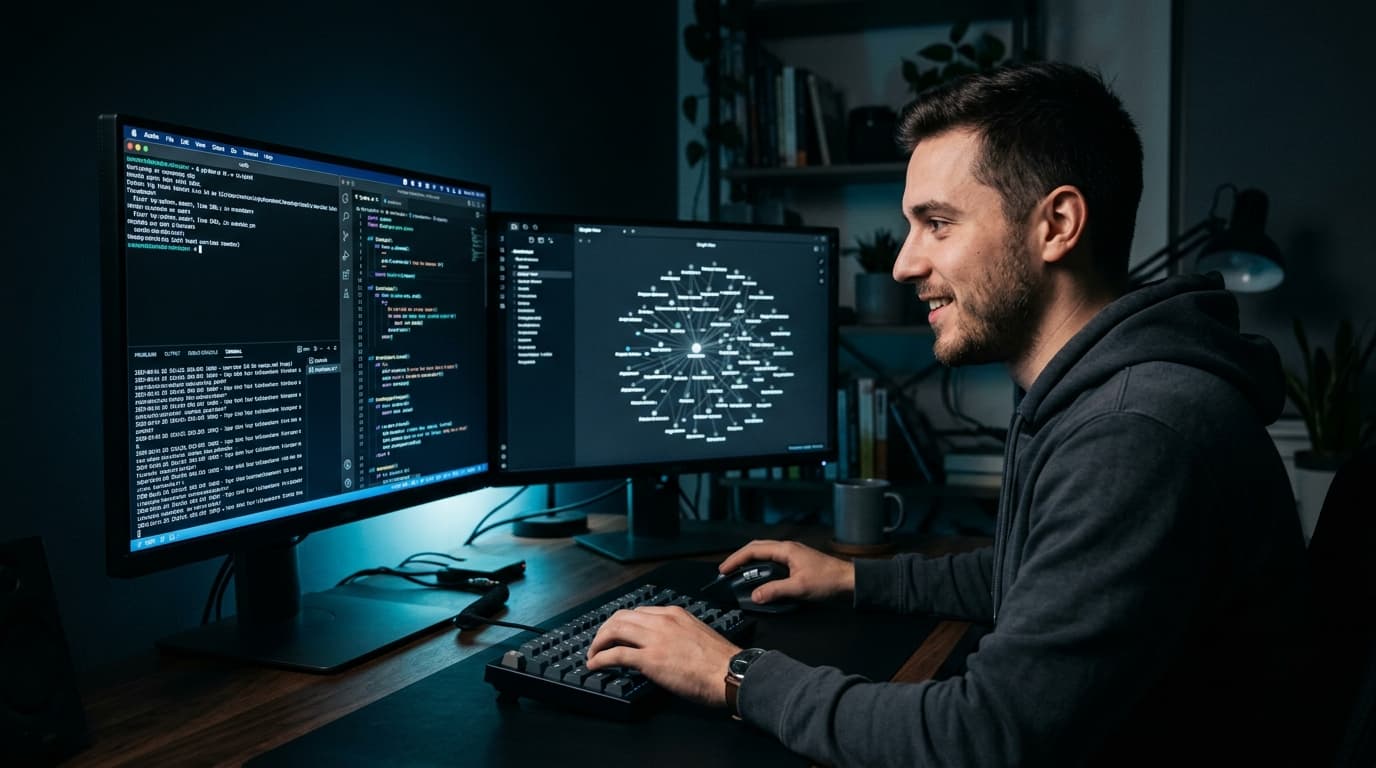
Claude Code runs in a terminal. That is not a flaw. For founders who are comfortable there, it is actually the right environment for serious AI work. The ceiling is that most non-technical service business owners will not cross that threshold. And for those who do, the work is just beginning: CLI calendar tools, terminal email clients, scriptable task management. One consulting founder described his setup as 'making my workflow command line based so CC can work it.' That is a full workflow redesign, not a tool you add.
02
YOUR CONTEXT LAYER IS YOUR RESPONSIBILITY
Your business brain works as long as it reflects your actual business. New offer, new client, changed priorities. Every shift creates drift between what your context files say and what is true. You can build that layer as a single CLAUDE.md or as a structured folder system with dozens of files. Either way, keeping it current is ongoing founder work. Nobody else can do it for you until the system is stable enough to hand off. Nobody teaches what happens when it drifts.
03
EVERY INTEGRATION IS A MANUAL BUILD
Claude Code can automate workflows, and people are doing it. The ceiling is not capability, it is ownership. Calendar, email, CRM, meeting transcripts: each connection is a separate MCP server you set up, test, and maintain. One consulting founder needed four separate CLI tools just to handle calendar and email for one person. When a tool updates, the integration can break. Who fixes it? You. The ceiling is not what it can do. It is who owns it when something changes.
04
REACTIVE, NOT AUTONOMOUS
Claude Code now has remote access — you can use it from anywhere. What it cannot do is act without you. It is reactive: you prompt, it responds. A service business needs systems that trigger without a human starting them. Intake that processes while you sleep. Follow-ups that fire while you are with a client. Reporting that runs on schedule. That is the distinction: reactive tool vs. autonomous system. Both are useful. They solve different problems.
05
YOU ARE MAINTAINING TWO SYSTEMS, NOT ONE
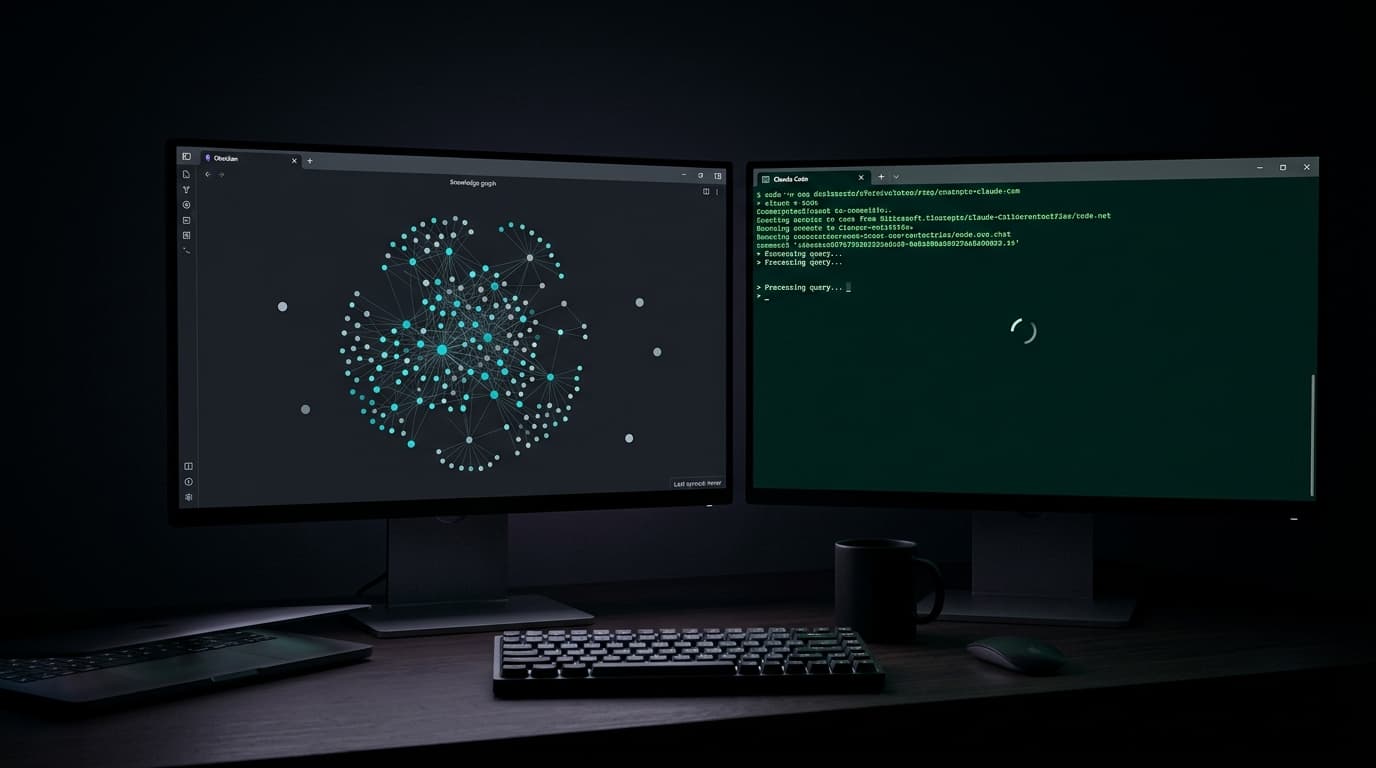
Claude Code is one application. Obsidian is a different application. They are made by different teams, built on different architectures, and they do not natively integrate with each other. The bridge between them is yours to manage. Every update cycle, every Obsidian plugin that breaks on a new release, every change to how Claude Code handles context, that gap is yours to close, every time. That is not a one-time setup cost. It is an ongoing job that compounds. For a developer who enjoys that kind of work, fine. For a founder who would rather be doing client work, the friction accumulates quietly until the system has stopped working for weeks and you have not noticed because you stopped relying on it.
06
THE BUILD BELONGS TO YOU
The more advanced setups solve one real problem: a web dashboard wrapping Claude Code means non-technical people get buttons instead of a terminal. That is a genuine improvement. The ceiling it does not solve: someone had to build the dashboard. Someone had to architect the skill library, design the domain taxonomy, write the automation triggers, configure the headless Claude Code execution layer, structure the memory vault, and connect the integrations. That person needed weeks of learning before a single button worked. And after the build: they own the maintenance. Every skill that drifts. Every integration that breaks on an update. Every new workflow the business needs. You have to learn the architecture. You have to execute the build. You have to maintain the system after. That is three compounding responsibilities stacked on top of running a service business. The dashboard is the interface. The build is still yours.
THE COMPARISON
Claude Code + Obsidian vs Business AI Operating System
The vocabulary has shifted. In 2026, the more structured DIY setups are called the Agentic OS rather than Claude Code plus Obsidian. Three layers instead of two: skill library, memory vault, observability dashboard. That is a more sophisticated build than the Obsidian-first approach, and a more honest accounting of what the system requires. The comparison below applies to both. The architecture got more structured. The ownership did not change.
WANT TO SEE THE ALTERNATIVE?
BUSINESS AI OS
What a Business AI OS actually is
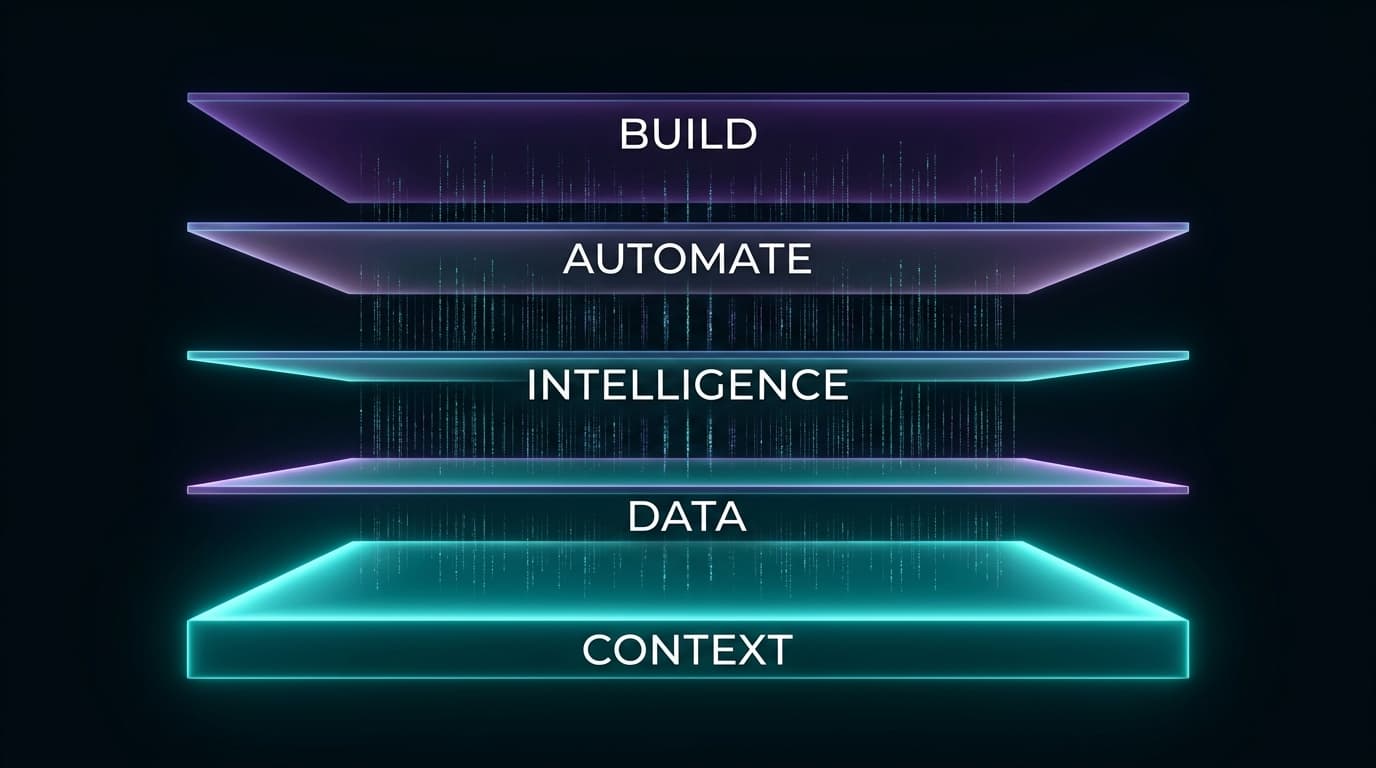
A Business AI OS is not a tool. It is an operating environment, four connected layers built specifically around your business.
Context. Everything the AI needs to know about how your business operates: clients, decisions, priorities, history. Not a CLAUDE.md you maintain. A structured knowledge base built by a specialist.
Data. Your real business data, connected live. CRM, email, meetings, forms. Not notes about the business. The actual records.
Intelligence. AI that understands your current goals and your current bottleneck, not just your last question.
Automate. Workflows that run without you watching — triggered by conditions, not by you remembering to ask.
The difference between a tool and a system is that a system compounds. Every layer feeds the next. Every decision gets smarter. The business gets more autonomous over time, not just once.
If you are a service business owner, here is where this starts. A Discovery Assessment uncovers exactly where your business is leaking time and revenue. Not a guess. A map. The AI engine gets built around that diagnosis. That is what makes this different from installing a set of automations and hoping they connect: you have the full picture first. Every build decision comes from the root cause. The system reflects how your business actually works, not how someone assumed it does.
The DIY Claude Code tutorials are teaching the same four layers, one video at a time, built by the founder, maintained by the founder. There is a faster path.
Shannon Winnicki has used Claude Code as her primary business tool for over a year. Revaya AI builds Business AI OSes for founder-led service businesses.
Last updated: May 2026
FREQUENTLY ASKED QUESTIONS