Andrej Karpathy, one of the most respected AI researchers working today, published his personal knowledge base workflow this week. Raw research goes into a folder. Claude compiles it into a structured wiki. Obsidian acts as the frontend. He called it "incredibly useful."
Then, at the end of the post, he wrote this:
"I think there is room here for an incredible new product instead of a hacky collection of scripts."
That sentence is the whole article.
A Business AI Operating System is a connected layer of AI agents, workflows, and persistent knowledge that runs your business operations without you in every loop. Obsidian and Claude Code give you an exceptional knowledge foundation. A Business AIOS sits on top of that foundation and acts on it, routing decisions and triggering workflows while you focus on the work that actually needs you.
Why Is Obsidian + Claude Code the Right Foundation?
Karpathy is not wrong about the stack. Obsidian crossed 1.5 million active users in February 2026, growing 22% year over year. The reason is straightforward: local markdown files, no vendor lock-in, and 2,700 plugins. When Claude Code opens inside your vault, it reads your notes, your projects, your conventions. It knows who you are from the first prompt. You stop re-explaining your business every session.
Greg Isenberg posted a workflow thread on this that got 420 replies and 1.3 million views. The framing he used: "how to use Obsidian + Claude Code to build a 24/7 personal operating system."
Personal. That word matters. I'll come back to it.
Chase AI made a video that explains the value well. He described a spectrum. On one end: papers thrown on the floor. Everything unorganized, Claude drowning in noise. On the other end: the Library of Congress. Full RAG embeddings, vector databases, infrastructure most founders will never actually build or maintain. In the middle: a filing cabinet. Organized, accessible, functional. That's what Obsidian + Claude Code buys you. A filing cabinet that's almost free to set up and that Claude already knows how to use.
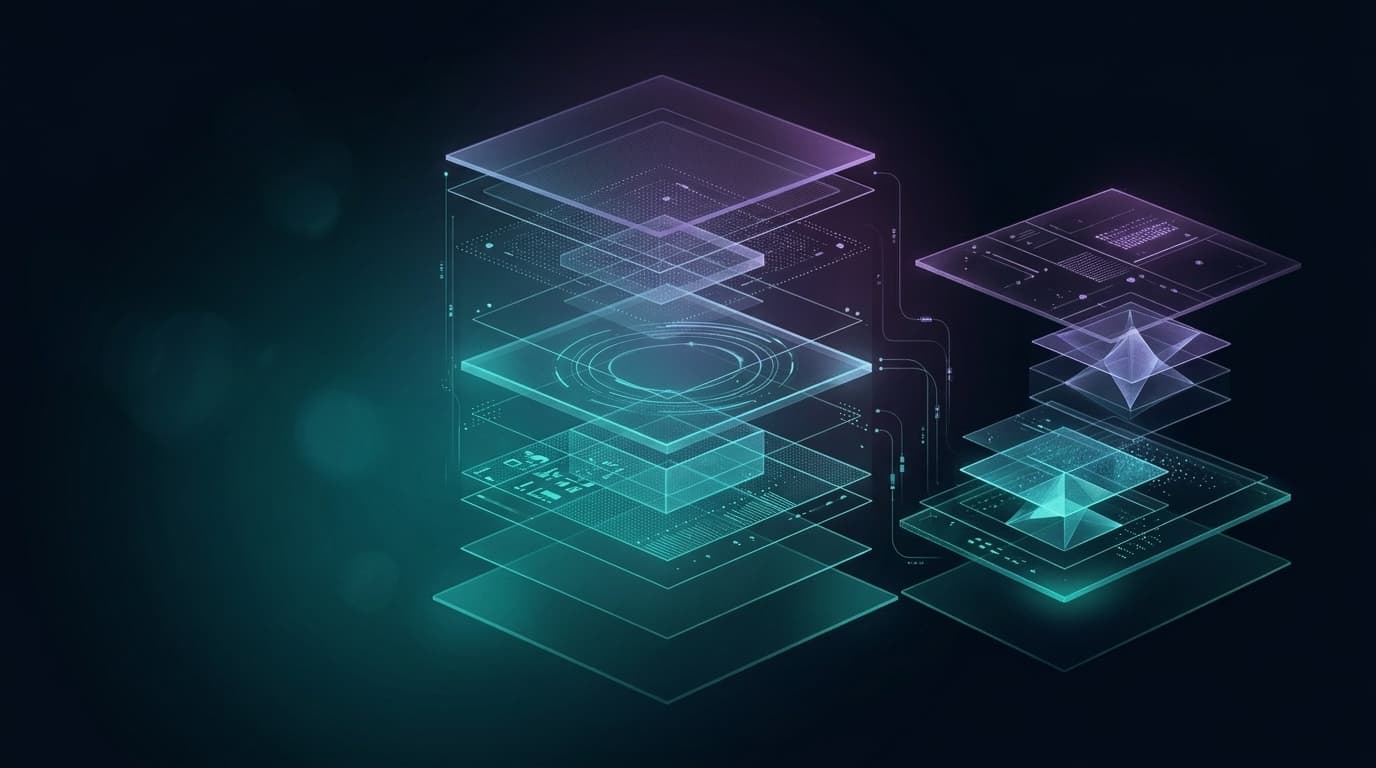
By May 2026, Chase had evolved the framing. He named the architecture the Agentic OS: three layers — a skill and automation library, a structured memory vault built on the Karpathy pattern, and a web dashboard that lets non-technical users access the system through buttons instead of a terminal. More structured name. Same ceiling.
That's genuinely worth having. And if it works for how you operate, keep using it.
What Does This Stack Actually Buy You?
When it works well, Obsidian + Claude Code gives you three things.
Persistent context. Your CLAUDE.md file acts as an instruction manual. Claude opens your vault, reads your notes, and understands the shape of your business. Not perfectly, but better than starting from zero every session. That context is real.
Organized knowledge. Notes link to notes. Projects connect to decisions. You can ask Claude to surface relationships between documents you wrote months apart. For a solo founder, this is genuinely powerful.
A system you own. No subscription that changes its terms. No vendor that owns your data. Every file is a plain markdown document on your hard drive. That ownership matters.
PenfieldLabs built this workflow for a content creator and ended up with a 1,150-note vault with 4,700 typed relationships. Claude Code managed all of it. Obsidian as the frontend. It works.

Where Does This Stack Stop Working for Founders?
Here's the thing nobody says out loud.
The value of this setup scales directly with how well-organized your vault is. Meaning you are always the maintainer. Every new client, every changed priority, every shift in your offer creates drift between what your context files say and what is actually true. Keeping them current is ongoing founder work. Nobody else can do it until the system is stable enough to hand off. And most people never get there.
Claude still starts fresh every session. Your vault gives it context. Not memory. It reads your notes at the start. If you updated something mid-session, it won't know unless you tell it to re-read the file.
Context window limits are real. Large vaults need deliberate scoping. If you have ten years of notes and half-finished ideas in there, Claude will surface noise as often as signal.
But the deepest limitation is the one Chase AI eventually named directly. In his second Agentic OS video, at minute 18, he said this: "You aren't the ICP here. There's true value for the 99.9%. It just isn't really given to them right now." His entire architecture, Karpathy's entire post, Greg Isenberg's viral thread — all of it is framed as a personal operating system.
One person. One vault. One brain.
A service business is not one person. It is clients, handoffs, intake, follow-ups, reporting, recurring operations. The stack was designed for a knowledge worker building their second brain. Not for a business that needs to run when the founder is with a client, asleep, or on vacation.
What Gap Did Karpathy Actually Name?
He called it himself: "a hacky collection of scripts." That's what most DIY AIOS builds become. You add an MCP server for calendar. Another for email. A third for meeting transcripts. Each connection is a separate integration you set up, test, and maintain. When a tool updates, the integration breaks. Who fixes it? You.
The filing cabinet is excellent. The filing cabinet does not run the office.
What Is the Difference Between a Second Brain and an Operating System?
A second brain stores and surfaces what you know. You are still the one who opens it, reads it, interprets it, and decides what to do with it.
An operating system acts on what you know. Without you in every loop.
The distinction is who does the routing. In Obsidian + Claude Code, you are always the interpreter. You open the terminal. You start the session. You ask the question. You do something with the answer.
A Business AIOS routes, acts, and reports. Intake processes while you sleep. Follow-ups fire while you are with a client. The weekly report runs on schedule and lands in your inbox. You review decisions the system made. You do not make all the decisions yourself.
Both are useful. They solve different problems. Most founders who say "AI doesn't work for me" have a second brain when they need an operating system.
How Does a Business AIOS Connect to Your Knowledge Base?
Obsidian is one example. It is not the only one.
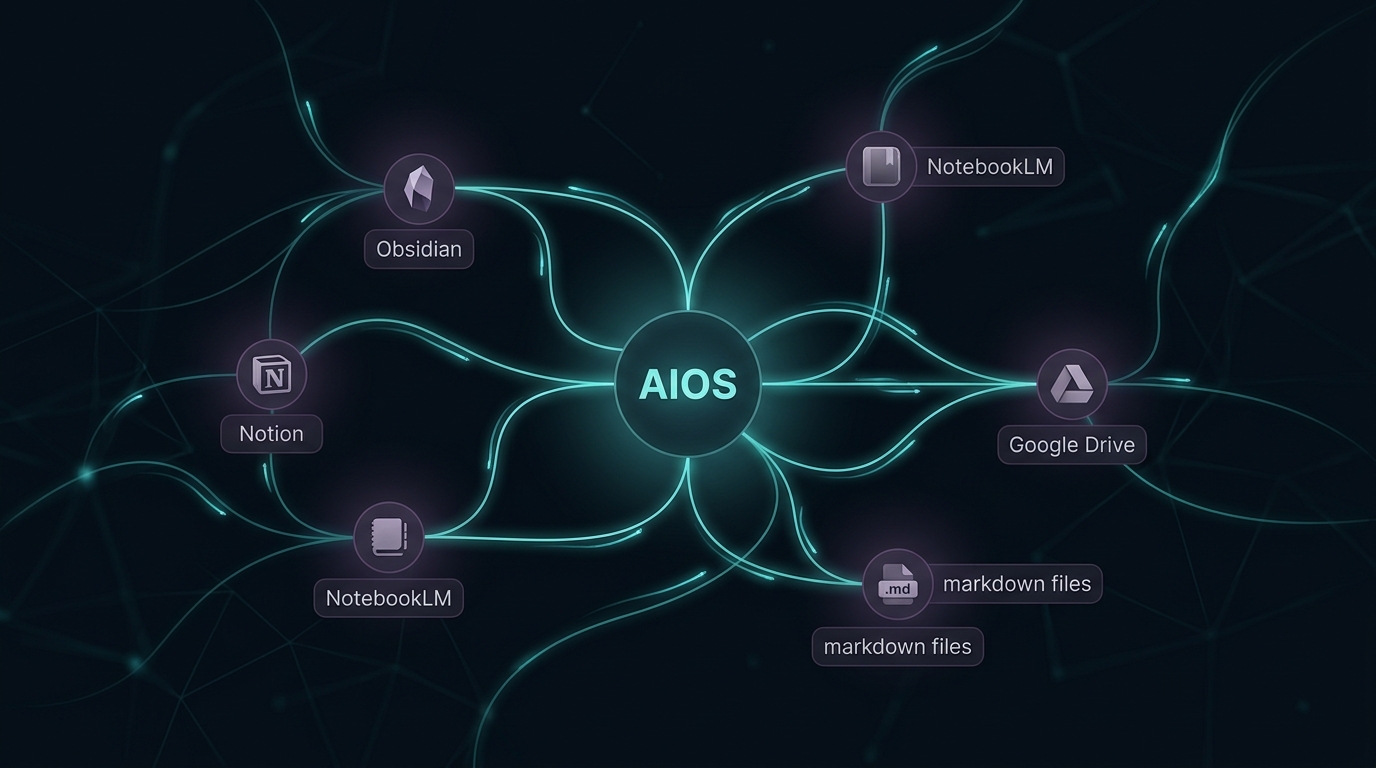
A Business AIOS connects to wherever your knowledge already lives. Notion, NotebookLM, a structured folder of markdown files, a shared Google Drive your team actually uses. The connection is the point, not the tool. The AIOS treats your existing knowledge base as a source, reads from it, and acts on it. You do not have to rebuild your knowledge infrastructure to make it work.
If you are in Obsidian, it connects to your vault. If you are in Notion, it connects to your workspace. If your knowledge lives in meeting transcripts and email threads, it connects to those. The architecture is the same: your knowledge layer feeds the operating layer.
The AIOS is what sits on top and acts. It routes decisions, triggers workflows, and surfaces what is relevant before you know to ask. Your knowledge base does not change. It becomes the foundation the system runs on instead of the thing you consult manually.
Karpathy said there is room for an incredible new product. He described exactly what a Business AIOS is: raw data compiled into an organized structure, operated on by agents to produce outputs, with the founder reviewing results instead of doing the work.
He was describing the architecture. The business version of it connects to wherever you already are.
If you are running Obsidian + Claude Code and finding that you are still the bottleneck, that the system is smart but not autonomous, that it knows your business but does not run it, that is the ceiling he named. And it is not a flaw in your setup. It is the edge of what a second brain can do.
For a full breakdown of where each ceiling sits and what the alternative looks like, read the comparison.
The assessment below takes five minutes. It tells you which function in your business has the highest-ROI automation opportunity. That's the starting point.